
What to Expect During a Tooth-Colored Filling Appointment
September 24, 2026Finding out you need a filling is rarely the part of a dental visit anyone gets excited about. Even if the cavity is small, your brain may immediately jump to the usual questions: Will it hurt? How long will I be numb? Will I be able to see the filling when I smile?
At ADC Dental Group in Joplin, Dr. John Durling uses tooth-colored fillings to repair teeth affected by decay. The material is matched to the surrounding tooth so the repair blends in naturally, especially in areas that show when you smile. The filling also rebuilds the part of the tooth that has been weakened so you can chew comfortably again.
If you have not had a filling in years—or ever—the appointment can feel more mysterious than it really is. There are a handful of steps, a few odd sounds, and usually some time spent waiting for your lip to feel like your lip again. Here is what you can expect.
Before We Get Started
Dr. Durling will take another look at the tooth and review what needs to be repaired. He may also check your X-rays and talk with you about where the cavity is and how deep it appears to be.
This is a good time to mention what you have noticed at home. Maybe cold water gives you a quick zing, floss keeps snagging in one spot, or you have started chewing on the other side because that tooth just feels off. Those symptoms can help us understand how the tooth has been behaving before treatment.
If dental work makes you nervous, let us know before we begin. Some patients with dental anxiety prefer to use nitrous oxide to calm the nerves. Some patients want a running commentary, while others would rather put on headphones and be told only when they need to open wider or bite down. We can work with whichever version of the appointment makes you more comfortable.
Getting the Tooth Numb
For many fillings, we use local anesthetic to numb the tooth and the area around it. There is usually a brief pinch or pressure while the anesthetic is placed, followed by that familiar heavy feeling in the lip, cheek, or tongue.
Before Dr. Durling starts working, we make sure the area is numb enough. If you feel something sharp during the appointment, raise your hand and let us know. We can stop and give the area more time or more anesthetic if needed.
After the appointment, the numbness may hang around for a while. This is also when people sometimes discover that drinking from a cup feels oddly complicated or that their lip feels enormous even though it looks perfectly normal. Until the feeling comes back, be careful with hot foods and chewing so you do not bite your cheek or tongue.
Removing the Decay
Once the tooth is numb, Dr. Durling removes the decayed part of the tooth and cleans the area. You will hear the dental handpiece and feel vibration and pressure, but the anesthetic should keep the tooth itself comfortable.
The sound is usually the part people notice most. Everything seems louder when it is happening inside your own mouth, especially with the suction running at the same time. If you have headphones, this is often the part of the appointment when they earn their keep.
As Dr. Durling works, he is removing the softened, damaged tooth structure and leaving behind a clean area for the filling. If the decay turns out to be deeper or larger than it appeared on the X-ray, we will explain what we find before changing the plan.
Placing the Tooth-Colored Filling
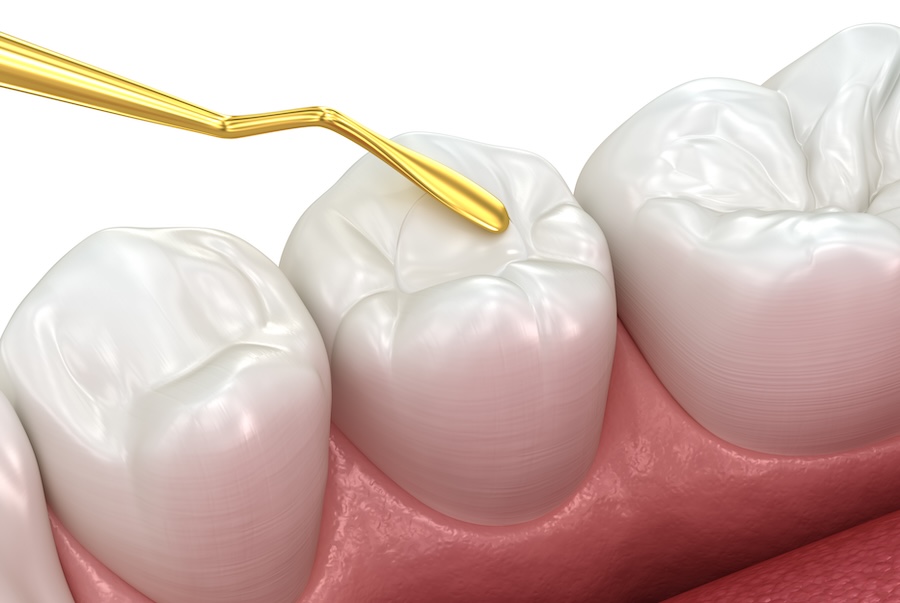
Once the decay is gone, the tooth is cleaned and kept dry so the filling material can bond well. Tooth-colored fillings are usually made from composite resin, which starts out soft enough to shape before it is hardened.
Dr. Durling places the material into the tooth and shapes it to rebuild the missing area. Depending on the size of the filling, he may add the material in several layers. Each layer is hardened with a bright curing light.
After that, the filling is smoothed, shaped, and polished so your tongue does not spend the next three days finding a rough edge every five minutes. On back teeth, Dr. Durling recreates the grooves and contours that help the tooth chew normally. He also checks that the edges are smooth enough to brush and floss around easily.
Composite comes in different shades, and Dr. Durling chooses one that blends closely with the natural tooth. That shade matching is part of what makes tooth-colored fillings less noticeable than older silver-colored restorations. If the filling is in a highly visible area and appearance is especially important to you, we can talk through what to expect before treatment begins.
Checking the Bite
Near the end of the appointment, we will hand you a little piece of marking paper and ask you to bite down. Then we may ask you to tap your teeth together a few times. The paper leaves marks on the filling that show us exactly where your teeth are touching.
This part can feel oddly difficult when half your mouth is still numb. You may think you are biting normally while your brain is busy trying to figure out where your cheek ends and your teeth begin. We check the marks, smooth any spot that is hitting too soon, and have you bite again.
Later, once the numbness is gone, pay attention when you eat. If that tooth feels like it hits before all the others, or you keep noticing it every time you close your mouth, call us. A quick bite adjustment can make a big difference.
What the Tooth May Feel Like Later
A tooth can feel a little different after a filling, especially if the cavity was deeper. You may notice some sensitivity to cold or pressure for a short time. Sometimes the tooth simply feels more noticeable for a day or two because you just had work done there.
Mild sensitivity should gradually settle down. Pain that keeps increasing, swelling, or a tooth that hurts every time you bite deserves another look. If something still feels off after the numbness is gone, call us and we can check the bite and the filling.
Caring for the Filling at Home
Once the numbness wears off and the tooth feels comfortable, you can go back to your normal brushing and flossing routine. Brush with fluoride toothpaste and clean between the filled tooth and its neighbors every day.
You may notice the filling more at first simply because you know it is there. Within a few days, most people stop thinking about it. At future visits, Dr. Durling will check the filling for wear, small chips, and changes around the edges.
If floss starts catching there later on, the tooth becomes sensitive again, or something feels rough, mention it at your next visit. Teeth and dental work both take plenty of abuse from years of meals, coffee, ice, popcorn kernels, and whatever else ends up on the chewing schedule.
Tooth-Colored Fillings at ADC Dental Group in Joplin
A filling appointment usually feels a lot less mysterious once you know what is coming. The tooth gets numb, the decay is removed, the filling is shaped and polished, and then you spend a little while talking funny until your cheek wakes back up.
At ADC Dental Group in Joplin, Dr. John Durling and our team can examine a sensitive tooth, explain what we see, and help you feel prepared before treatment begins. If you have a tooth that has been nagging you—or a cavity you already know needs attention—schedule an appointment and let’s get it taken care of!
Categorised in: Dental Fillings