How to Clean Dentures Properly (and What to Avoid)
August 18, 2026Dentures spend a lot of time in contact with food, saliva, and the tissues of your mouth, so they need daily cleaning just like natural teeth do. However, the routine is a little different because denture material can scratch, warp, or break if it is cleaned the wrong way. Did you know that habits as ordinary as using regular toothpaste or very hot water can actually shorten the life of a denture?
At ADC Dental Group in Joplin, MO, Dr. John C. Durling helps patients care for full and partial dentures so they stay clean, comfortable, and in good condition. There are a few basics that make the biggest difference, including how you brush, what you soak them in, and how you handle them when they are out of your mouth. Just as important, a few common cleaning shortcuts can do more harm than good.
Rinse Dentures After Eating
Food can collect on the chewing surfaces, underneath the denture, and around clasps on a partial denture. So, when you can, remove the denture after meals and rinse it with cool or lukewarm water. That quick rinse helps wash away loose food before it sits against the denture or gums for the rest of the day.
However, be careful while handling it because wet dentures can be slippery. It does not take much for one to slip out of your hand and land on the sink or floor. Because of that, many people prefer to rinse dentures over a sink with a little water in it or over a folded towel.
A rinse during the day is helpful, but it does not replace brushing. Plaque can still cling to the surface even when the denture looks clean at a glance. So, at least once a day, the denture still needs a more thorough cleaning.
Brush Dentures Every Day
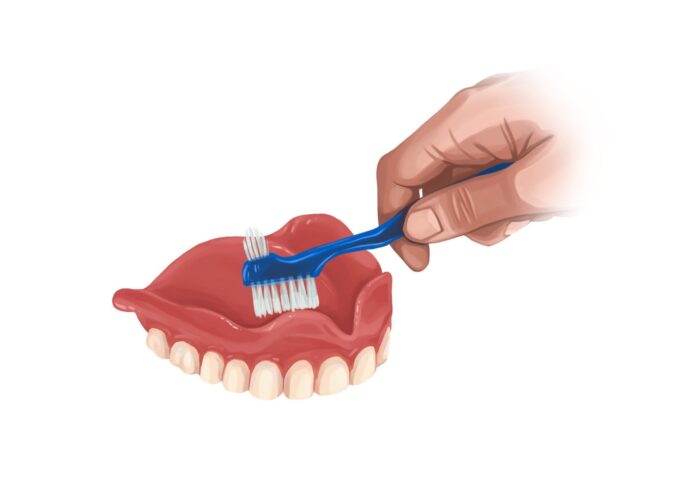
Before brushing, remove the denture rather than trying to clean it while it is still in your mouth. Then, use a soft denture brush or another soft-bristled brush to clean all of the surfaces. Pay attention to the chewing surfaces, the side that rests against the gums, and any grooves where food tends to collect.
If you wear a partial denture, spend a little extra time around the clasps and attachments. Those smaller areas can hold plaque and food, especially where the partial fits around natural teeth. However, avoid bending or pulling on the clasps while cleaning because even a small change can affect the fit.
Use gentle pressure as you brush. Scrubbing harder does not make the denture cleaner, but it can leave scratches where stains and plaque are more likely to collect later. So, a slow pass over the whole appliance is usually better than going after one stubborn spot too aggressively.
Use a Denture Cleaner Instead of Regular Toothpaste
Regular toothpaste is often the first thing people reach for because it is already sitting beside the toothbrush. However, many toothpastes are abrasive enough to scratch denture material. Those scratches may be tiny, but over time they can make the surface rougher and harder to keep clean.
Instead, use a denture cleanser or another product Dr. Durling has recommended for your appliance. If the product is meant for soaking, follow those directions rather than brushing with it unless the label says otherwise. Then, rinse the denture thoroughly before putting it back into your mouth.
Harsh household cleaners are a poor fit for denture material too. A product that works well on a sink or countertop can be far too strong for something that sits against your gums all day. So, stick with products made for dentures unless Dr. Durling tells you otherwise.
Do Not Use Hot or Boiling Water
Hot water may seem like a good way to get dentures extra clean, but heat can warp some denture materials. Even a small change in shape can affect how the appliance sits against your gums. Then, a denture that used to feel stable may start rocking, rubbing, or creating sore spots.
So, use cool or lukewarm water for rinsing and cleaning. The same applies when you are mixing or using a soaking solution, unless the product directions specifically say otherwise. Very hot water can change the denture itself, and once that happens, cleaning is no longer the main problem.
If a denture suddenly feels different after being exposed to heat, do not try to bend it back into shape yourself. Bring it to ADC Dental Group so Dr. Durling can check the fit. Home adjustments can easily make the fit worse.
Clean Your Gums, Tongue, and Remaining Teeth Too
Once the denture is out, there is still more to clean. Use a soft toothbrush or soft cloth to gently clean your gums, tongue, and the roof of your mouth. That helps remove plaque and food residue from the tissues that sit underneath the denture during the day.
If you still have natural teeth, keep brushing them with fluoride toothpaste and cleaning between them every day. This is especially important with a partial denture because the natural teeth supporting it can still develop cavities and gum disease. In addition, food tends to collect around the teeth beside clasps, so those areas usually need a little extra attention.
Pay particular attention to those supporting teeth when you brush and floss. If plaque keeps collecting there, the gums can get irritated and the teeth can become harder to keep healthy. Keeping those teeth in good shape helps the partial keep doing its job too.
Take Dentures Out at Night
In most cases, dentures should not stay in your mouth around the clock. Removing them at night gives the gums and other tissues underneath a break from constant pressure. It also gives you a good chance to clean both the denture and your mouth before bed.
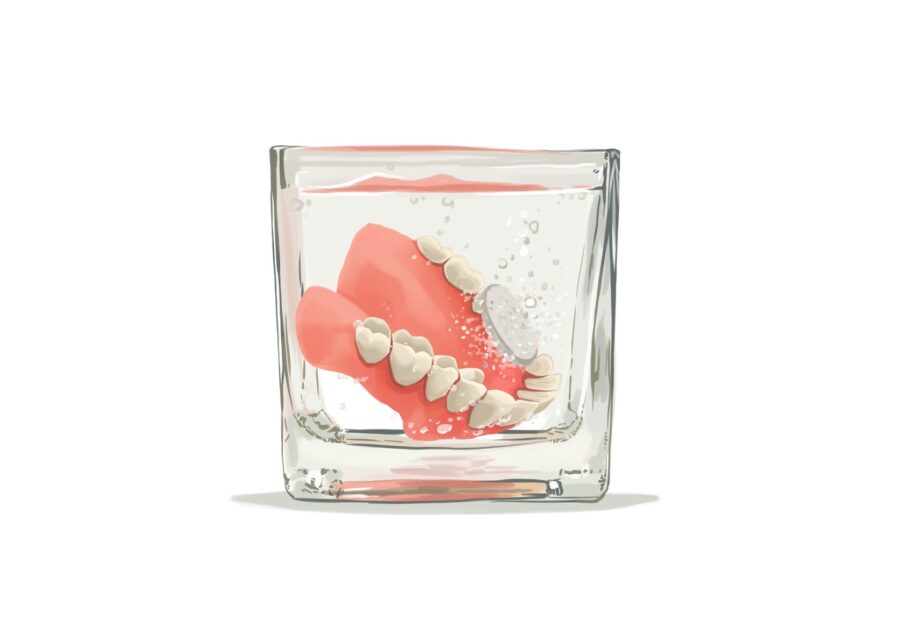
Once the denture is out, store it according to the instructions you were given. Many dentures should stay moist when they are not being worn, so they may be placed in water or an appropriate soaking solution overnight. However, the right storage method can vary depending on the material and whether the appliance has metal components.
If you have gotten used to sleeping in your denture every night, bring that up with Dr. Durling. He can tell you what he recommends for the type of denture you wear. From there, you can settle into an overnight routine that fits your appliance.
Soaking Can Help With Daily Cleaning
A denture-soaking solution can help loosen deposits and reduce odor-causing buildup. Depending on the product, the denture may soak for a short period or overnight. However, soaking works best alongside brushing rather than instead of it.
After soaking, rinse the denture thoroughly before putting it back in your mouth. Denture cleansers are made for the appliance, not for your gums or other oral tissues. So, any solution left on the denture should be washed away first.
Also, check the directions before soaking a partial denture. Some products can affect metal components, so a cleanser that works well for a full acrylic denture may not be right for every partial. If you are not sure, ask our team what works with the appliance you have.
Avoid Bleach and Harsh Household Cleaners
Bleach is strong, but that does not make it a good everyday denture cleaner. It can damage certain materials, discolor the pink acrylic, and affect metal parts on a partial. So, unless Dr. Durling has specifically told you to use something different, stick with a cleaner made for dentures.
The same caution applies to strong homemade mixtures and abrasive powders. Some can roughen the surface, while others can damage the material or leave residue behind. Because of that, it is better to ask before trying a new cleaner you already have at home.
If staining is not coming off with normal cleaning, bring the denture with you to your next visit. Some deposits need professional cleaning rather than a stronger product at home. That is especially true if the surface has started to feel rough.
Do Not Scrape Off Tartar With Household Tools
Dentures can develop hard deposits that do not brush away easily. However, using a knife, pin, metal pick, or another sharp object to scrape them off can gouge the surface. It can also slip, and then you are dealing with both a damaged denture and a sore hand.
If buildup has hardened onto the appliance, let our team take a look. Dental offices have tools and cleaning methods that can remove deposits without cutting into the denture. Then, once the hard buildup is gone, regular brushing and soaking can take over again.
Some people also build tartar faster than others, and certain areas are simply harder to reach. So, if the same spot keeps collecting buildup, Dr. Durling may be able to show you a better angle or brush for that area.
Be Careful With Denture Adhesive
If you use denture adhesive, remove the old adhesive from both the denture and your gums each day. Leaving yesterday’s adhesive in place and adding more over it can make cleaning harder and may affect how the denture sits. So, start with clean surfaces before applying fresh adhesive.
Use the amount recommended for your denture rather than adding more because the appliance feels loose. If you regularly need a large amount to keep it from moving, the fit may need to be checked. Adhesive can help with stability, but it cannot make up for a denture that no longer fits the tissues underneath.
Your mouth changes over time, especially after teeth have been removed. Because of that, a denture that once fit well can gradually start rocking or rubbing. If you notice yourself reaching for more adhesive every week, bring the denture in so we can check the fit.
Watch for Odor, Stains, and Rough Areas
A clean denture should not have a persistent odor after it has been brushed and rinsed. If the smell keeps returning quickly, plaque or deposits may be collecting somewhere that is hard to reach. So, take another look around grooves, clasps, and the side that rests against the gums.
Staining can also build gradually from coffee, tea, tobacco, and certain foods. However, reaching for a harsher cleaner can damage the surface, so stubborn stains are better discussed with our team. Professional cleaning may be able to remove deposits that daily brushing cannot.
Also, pay attention to how the denture feels against your tongue and gums. If the surface becomes rough or develops a sharp area, schedule a visit rather than sanding or filing it yourself. A small rough spot can become very irritating after it rubs the same place all day.
Do Not Try to Repair a Broken Denture Yourself
A cracked denture, broken tooth, or bent clasp needs professional attention. Super glue and household repair kits may seem convenient, but they can damage the appliance or make a proper repair harder later. They can also leave rough areas or change how the denture fits.
If the denture breaks, collect any loose pieces and bring them with you. Then, call ADC Dental Group so we can see what type of repair may be possible. Depending on the damage, the denture may be repaired, adjusted, or replaced.
The same applies to a partial denture clasp that suddenly feels loose or bent. Do not squeeze it tighter with pliers. A very small bend can change how the partial sits, and it is easy to move the clasp farther than you intended.
Keep Denture Checkups on Your Schedule
Even if you no longer have natural teeth, regular dental visits still have a place in your routine. Dr. Durling can check how the denture fits, look for pressure spots, and examine the gums and other tissues underneath it. Meanwhile, if you wear a partial, the remaining natural teeth need regular exams too.
The fit can change gradually as the jaw and gum tissue change over time. You may first notice more movement while eating, a sore spot that keeps coming back, or adhesive becoming more necessary than it used to be. When that starts happening, it is better to have the denture checked than keep compensating for it at home.
A denture also does not need to be visibly broken before it needs attention. If chewing has become harder or one area keeps rubbing, bring it in. Sometimes a small adjustment is enough to make the appliance feel much better again.
A Simple Daily Denture-Cleaning Routine
In the morning, rinse the denture thoroughly before putting it in, especially if it has been soaking overnight. Meanwhile, brush any natural teeth and gently clean your gums, tongue, and palate. Then, put the denture back in once both your mouth and the appliance are clean.
After meals, rinse the denture when it is practical to remove loose food. Later, at least once each day, take it out and brush every surface with a soft denture brush and an appropriate cleanser. If you use adhesive, this is also a good time to remove the old material completely.
At night, clean the denture again as directed and give the tissues underneath a break unless Dr. Durling has told you otherwise. Store the appliance properly so it does not dry out or become damaged. Once those steps become familiar, they tend to fit naturally into the rest of brushing and getting ready for bed.
Denture Care at ADC Dental Group in Joplin, MO
If your dentures have started feeling loose, collecting stubborn buildup, developing an odor, or rubbing in one particular spot, bring them to ADC Dental Group in Joplin, MO. Dr. John C. Durling can check the fit, look at the tissues underneath, and see whether the appliance needs professional cleaning, an adjustment, or another type of care. Sometimes the denture is clean, but the fit has changed enough that it still does not feel right.
Also, bring your denture-cleaning questions with you, especially if you are unsure about a cleanser, soaking solution, adhesive, or tool you have been using at home. Call ADC Dental Group to schedule a denture check, and we’ll help you keep your dentures clean, comfortable, and working well!
First image from Authority Dental under CC 2.0
Second image from Authority Dental under CC 2.0
Categorised in: Dental Tips, Dentures