
ADC Dental Group

← Older posts

A Message to Moms-Invisalign Teen [VIDEO]

Invisalign Teen offers an easier, more flexible way to give your child the confidence of a great smile without the restrictions, irritation and self-consciousness associated with the metal brackets and wires of traditional braces. Plus, since the aligner trays are removable, your teen can continue brushing and flossing normally, which leads to better overall periodontal health.

You’ll find that Invisalign Teen even offers more convenience for your schedule as well. For you, fewer doctor visits means less time out of your busy schedule. And the Blue Dot Wear Indicator on each aligner provides an approximate gauge of whether your teen has been wearing the aligners consistently and for the recommended amount of time. The indicators will fade as the time to move to the next set of aligners gets closer.

If you decide that Invisalign Teen is the right choice for you and your family, we will be ready to help you take the next step toward giving your teen that perfect smile. Simply schedule a free Invisalign Teen consultation today by calling 866-478-7695.

Our FAQs can help you learn more about the advantages of choosing Invisalign Teen over traditional braces and where you will also find information about the costs involved with Invisalign treatment. You’ll be able to review the options you have for providing the very best for your teen.

Brushing Tips For Kids [VIDEO]

In recognition of National Children’s Dental Health Month, we wanted to provide you with pointers on how to care for your child’s teeth. Above is excellent video from Colgate that demonstrates the best way for kids to brush their teeth. We have listed the tips from the video as well as some additional suggestions of our own.

  • Begin brushing once the first tooth erupts.
  • Use a toothbrush with soft bristles and water or a training toothpaste.
  • For young kids, cradle their head in one arm and hold the toothbrush with the other.
  • Once your child is old enough to take instruction, add a dab of fluoride toothpaste. Make sure they don’t swallow it.
  • You will need to do most of the brushing since it takes a number of years before a child has the coordination to do it alone.
  • Tilt the brush at a 45 degree angle against the gum line and brush in small gentle circles.
  • Brush the insides of teeth first.
  • Use the tip of the toothbrush to clean behind each front tooth ,top and bottom.
  • Next, clean the outer surfaces of teeth.
  • Brush the chewing surfaces with a gentle back and forth motion.
  • Brush for at least two minutes. You can keep track with a timer or brushing along with a song.
  • Lightly brush the tongue and inside the cheeks with a tongue cleaner or the bristles of your toothbrush.
  • Rinse with water.
  • Your child should be able to brush without help between by age six or eight. You may want to go them yourself just to be sure.
  • Teach you child to brush and floss everyday, eat a nutritious diet and visit the dentist regularly.

If you have any questions or concerns about your child’s dental health, feel free to call us at 866-478-7695.

Kids, It’s Time to Rock Your Smile!

Each February, the American Dental Association (ADA) sponsors National Children’s Dental Health Month to raise awareness about the importance of oral health. Developing good habits at an early age and scheduling regular dental visits helps children get a good start on a lifetime of healthy teeth and gums.

Whether you’re a teacher or a parent, the ADA has free online resources that can help you with oral health presentations, ideas for the classroom and coloring and activity sheets that can be used as handouts.

This year’s NCDHM poster features the campaign’s slogan “ROCK YOUR SMILE“. This eye-catching poster features the McGrinn Twins, Flossy and Buck, along with their best friends and next-door neighbors Den and Gen Smiley, dancing and singing their way to a healthy smile. The teen poster features a student listening to great music while rocking a smile. This versatile poster will help speakers, teachers, and others who want to address both age groups. Posters can be used on billboards, in offices, classrooms, etc. To download the posters in 8″x10″ please click the links below.

Download Children’s Poster

Download Teen Poster

Download the McGrinn Twins Story

The NCDHM Program Planning Guide offers program coordinators, teachers and parents resources to promote the benefits of good oral health to children. The guide includes easy-to-do activities, program planning timetable tips, a sample NCDHM proclamation, and much, much more.

Looking for materials to help educate children on their oral health? The ADA has tips to help you talk with students from day care through high school. Check out the NEW Activities & Resources page.

Check out these games, puzzles, cool coloring sheets and our smile calendar. Print out the collection and grab your markers! You’ll be on the road to a healthy smile in no time.

What a Tangle! Activity

Decoder Activity

Crossword Puzzle

Words Activity

Wordsearch

Buck McGrinn and Den Smiley Coloring Sheet

Gen Smiley Coloring Sheet

Buck McGrinn Calendar

Healthy Smile Certificate

Tooth Anatomy

How to Floss

How to Brush

Full Set of 2012 Activity Sheets

This is a great time to schedule a check-up for your kids. You can call us at 866-478-7695 or schedule appointments online.

What To Do If You Crack or Break a Tooth

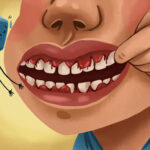
Your teeth are remarkably strong. However, if you bite down on something hard, fall or get hit in the mouth, you may crack or break a tooth. It is critical for you to know what to do in the event of a cracked or broken tooth, so that every action can be taken to save the tooth.

Minor tooth cracks (fractures) do not usually hurt.  If a large piece of your tooth breaks off, it can be very painful because the nerve inside the tooth is most likely damaged. When the nerve is exposed to air, hot or cold food or drinks, it could be extremely uncomfortable for you. Pain from a broken or cracked tooth may be constant or come and go. Many people experience discomfort when they chew because of the pressure on the tooth. In either case, whether painful or not, you should follow these steps in a timely manner.

What You Can Do

If you break a tooth,

  • Save any pieces.
  • Thoroughly rinse your mouth with warm water.
  • Use dental floss to remove any lodged food.
  • Apply pressure with a piece of gauze on any bleeding areas for about 10 minutes or until the bleeding stops. If this doesn’t work, use a tea bag with pressure on the area to stop the bleeding.
  • Apply a cold compress to the cheek or lips over the broken tooth. This will help reduce swelling and relieve pain.
  • If you can’t get to your dentist right away, cover the part of the tooth that is in your mouth with temporary dental cement. You can find this at a drugstore.
  • Take an over-the-counter pain reliever.
  • Never put aspirin or any other painkiller against the gums near the aching tooth because it may burn the gum tissue.
  • See your dentist as soon as possible.

There is no way that a cracked tooth can be treated at home. You need to see your dentist. Your tooth may look fine, only hurting when you eat. However, if the fractured tooth hurts all the time, it may have a damaged nerve or blood vessels. It is crucial for you to see the dentist before more damage is done.

What The Dentist Will Do

There are several types of tooth fractures and breaks, each of which requires different treatments. These include:

  • Minor cracks — Also called “craze lines,” these are surface cracks that affect only the outer white surface of the tooth, called the enamel. Minor cracks rarely need treatment. However, your dentist may lightly polish the area to smooth out any rough spots.
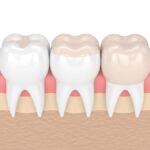
  • Cracked tooth — This type of fracture involves the whole tooth, from the chewing surface all the way down to the nerve. The pieces remain in place, but the crack gradually spreads. Cracks can sometimes be repaired with filling material. The tooth often will need a crown to prevent the crack from getting worse. If the pulp (nerve and other live tissues) is damaged, you may need a root canal as well.
  • Chips — Minor chips don’t always need treatment. Your dentist may suggest repairing the damage with filling material to prevent it from getting worse or to make the tooth look and feel better. If the chip is very small, the dentist may polish and smooth out the chipped area.
  • Broken cusp — These breaks affect the pointed chewing surfaces (the cusps) of the teeth. They usually do not affect the pulp and are unlikely to cause much pain. Your dentist may repair the damage to restore the tooth’s shape. Frequently, however, an onlay or crown will be required.
  • Serious breaks — These breaks go deep enough to expose the nerve. They almost always cause the tooth to hurt and be sensitive. Usually, the broken part of the tooth will bleed. You will need root canal treatment to remove the exposed nerve and probably a crown to restore the tooth to normal function so you can eat and chew properly.
  • Split tooth — This means that the tooth has split vertically into two separate parts. Some teeth, such as your back teeth (molars), have more than one root. It may be possible to keep one of the roots, which will then be covered with a crown. First, you will need root canal treatment. Second, the dentist will remove any roots that cannot be kept. Third, you will need a crown to cover the root and replace the tooth. In some cases, when a root cannot be saved, the tooth will have to be removed.
  • Vertical breaks or split root — These cracks start in the root of the tooth and extend upward toward the chewing surface. These breaks are often painful because the area around the root may be inflamed or infected. In most cases, the tooth will have to be removed.
  • Decay-induced break — In this case, the tooth has broken or crumbled because a cavity weakened it from the inside out. Your dentist will evaluate the cavity and recommend the best way to restore the tooth. In some cases, if the decay is extensive and goes down to the bone,the tooth may have to be removed.

If you have a broken or fractured tooth, please schedule an appointment so we may advise you on the best course of action. It may not hurt now, but we don’t want it to get worse and cause you agonizing pain. It only need a simple treatment now, but left untreated could end up requiring an extensive dental procedure.

Call us at 866-478-7695 if you have questions or concerns.

15 Quick Facts About Dental Sealants

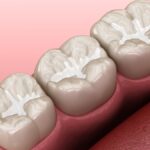
1. Sealants are a thin plastic coating that is painted on the tooth surface to fill the grooves and pits.

2. The coating is hardened to protect the tooth surface from decay.

3. Dental sealants keep out food and germs that cause decay.

4. Sealants are safe and easy to apply.

5. Children ages six to thirteen benefit the most from sealants.

6. The chewing surfaces of children’s teeth are susceptible to decay because children have a harder time cleaning the tiny grooves and pits on certain teeth, and fluoride is not necessarily as effective on the teeth in this area.

7. Adults also can benefit from this procedure because they have the same grooves and pits.

8. You may be a good candidate for dental sealants if you have a disability or do not use fluoridated water.

9. Sealants are usually applied to permanent molars as soon as they completely erupt from the gums.

10. Approximately three-quarters of sealed teeth remain cavity free, compared to less that one-third of teeth without sealants.

11. Sealants can save time, money and discomfort from more invasive procedures and help maintain intact teeth by preventing decay, which destroys tooth structure.

12. No tooth structure is removed when sealants are applied.

13. Sealants can only be seen up close. They can be clear, white, or slightly tinted, and usually are not seen while talking or smiling.

14. Dental sealants can last for as long as 5 to 10 years.

15. Sealants are one part of a total preventive dental care. A complete preventive dental program also includes fluoride, twice-daily brushing, wise food choices, and regular dental care.

If you have questions about sealants or would like to schedule an appointment, call us at 866-478-7695.

Schedule your family’s checkup today!

What is the Invisalign Treatment Process? [FAQs]

Q.  How long will treatment take?

A. The length of treatment depends on the severity of your case; however, the average case takes about 12 months for adults. The length of time necessary for a teen patient may vary.

Q. How do I get started with Invisalign?

A. It’s simple – first take the Self Assessment to see if Invisalign is right for you. Next, schedule a free consultation with Dr. Durling on ADCDentalGroup.com or by calling (866)478-7695Dr. John C. Durling II was recently named an Invisalign Elite Provider. He is the only Elite Preferred Provider in the Joplin, Springfield and Fort Scott areas. This designation is the highest level an Invisalign provider can earn and means that Dr. Durling has achieved an extraordinary level of Invisalign case experience.

Q. How often must I wear my aligners?

A. We find that aligners are most effective when worn 20 to 22 hours per day and removed only for eating, brushing and flossing.

Q. How often must I see Dr. Durling?

A. We will schedule regular appointments usually about once every four to six weeks. The goal of these visits is to ensure that your treatment is progressing as planned.

3 Appointments to Make This Year

As you are planning for the coming year, don’t forget your oral health. Here are three appointments to put on your calendar now.

  • 6 Month Check-up – This is the most important appointment to make for you and your family. It is at these visits where we can check for any problems that may have appeared in the last six months. Early detection is the greatest weapon against painful dental emergencies. Regular check ups and cleanings can prevent gum disease, infection, bone loss, heart disease, strokes and more. And to top it off, you walk out with your smile looking and feeling better than ever.
  • Invisalign Consultation – Invisalign not only gives you the smile you have always wanted, it can also correct and prevent dental complications. Invisalign can correct spaced teeth, crowded teeth, crossbite, underbite, overbite and combinations of these conditions. At this consult, we will determine if Invisalign is for you and discuss all the payment options we offer. Best of all, this appointment is FREE!
  • Zoom Whitening – Are you going to prom in April? Are you graduating in May? Are you attending a wedding in June? Will you start a new job this year? Do you have an important event this year that you want to look your best for? Schedule a Zoom Whitening. In just one 45 minute visit, your teeth can be up to 8 shades brighter and whiter.

We can schedule appointments up to 6 months in advance. Give us a call at 866-478-7695 to schedule all three of these appointments now. And, we will call to remind you.

Oral Health Resolutions

It’s that time again when most people are resolving to make changes in the coming year. Many resolutions are concerning health and wellness. An often forgotten area of health is the mouth. It is very clear that taking care of your oral health is an investment in your overall health.

Your oral health may affect, be affected by or contribute to various diseases and conditions, including endocarditis, cardiovascular disease, pregnancy and birth, diabetes, HIV/AIDS, osteoporosis, alzheimer’s disease and eating disorders.

This is the perfect time to determine to take better care of your mouth. You can protect your oral health, and thus your overall health, by including a few simply practices in your routine.

  • Brush your teeth after every meal or at least twice a day with a fluoride toothpaste.
  • If you can’t brush after every meal, chew a piece of sugarless gum or take a bite of a carrot or apple.
  • Use a toothbrush with soft nylon bristles. Soft bristles clean just as well as hard bristles.
  • Replace your brush about every three months.
  • Floss every day.
  • Choose healthy foods like cheese and crunchy vegetables.
  • Avoid starchy foods like chips and crackers. They can be just as bad for your teeth as sweets.
  • Drink unsweetened tea. It helps cut down on plaque and cavities.
  • Don’t smoke. Know that coffee, tea, colas and soy sauce can also stain your teeth.
  • Never use your teeth to open things.
  • Always wear a seatbelt. It can save your teeth in an accident.
  • Use a mouthguard if you play contact sports.
  • Watch for signs and symptoms of oral disease and contact your dentist as soon as a problem arises.
  • See your dentist regularly!

If you have any questions or concerns, please call us at 866-478-7695.

Schedule your 6 month appointment today!

Holiday Hours

All office of the ADC Dental Group will be closed from Friday, December 23rd through Monday, December 26th. Our offices will return to the regular schedule on Tuesday, December 27th. We wish you and yours a very Merry Christmas!!

You may leave a message at 866-478-7695 and we will contact you when we return to the office. You can also schedule an appointment anytime at ADCofJoplin.com.

Infant Dental Care Tips

Good oral hygiene begins before your baby’s first tooth even emerges. The American Academy of Pediatric Dentistry (AAPD) recommends establishing a “dental home” for your child before his or her first birthday. ”The earlier the first dental visit, the better chance of preventing dental problems later.” This also helps to prevent the development of dental anxiety and is the beginning of establishing healthy dental health patterns.

Infants have special oral health needs that every parent should know about. Here are some tips that will protect your baby’s precious smile.

  • Use gauze to clean your baby’s gums after feedings and at bedtime. Ideally, this should be done even before your child’s first tooth erupts.
  • Never let your baby fall asleep with a bottle of anything but water.
  • Avoid letting the baby nurse continuously. And after each feeding, wipe your baby’s teeth and gums with a clean, damp washcloth or a gauze pad.
  • Juice should be avoided and only provided with meals.
  • As soon as the teeth erupt, you can begin brushing them with a small soft-bristled toothbrush and a pea-sized amount of toothpaste after feedings and at bedtime.
  • When two baby teeth erupt side by side, gently floss them at least once a day (preferably before bedtime).
  • Wean your child from the bottle between 12 and 14 months of age.
  • Thumb sucking is normal, but can cause crooked teeth or bite problems if prolonged. If the habit continues past 3, we can provide you with suggestions to address the problem.
  • Take your infant to the dentist. Schedule your child’s first dental visit by the age of 1 or after a first tooth erupts.

Our dentists have extensive experience working with children. We taking pride in making their dental experience more enjoyable by helping them feel comfortable, entertained and respected.

For more information or to set up an appointment, call 866-478-7695.

Contact us for your appointment today!

← Older posts